

Clinical perfusion is a highly specialised and rewarding healthcare profession. It is also a demanding career with a competitive, work-integrated training pathway.
These FAQs explain:
- what perfusionists do;
- the education and training pathway;
- how trainee positions are obtained;
- what makes a strong applicant;
- what to expect during training;
- pathways for overseas-trained perfusionists; and
- career opportunities after qualification.
Note: Program requirements and policies may change. The current requirements published by Monash University and the Australian and New Zealand Board of Perfusion (ANZBP) take precedence over the general information provided on this page.
If you are considering a career as a perfusionist, particularly if you are interested in a trainee position, it is essential that you read this entire FAQ list thoroughly. This page addresses common questions about the role, its demands, and the pathway to becoming a qualified perfusionist in Australia and New Zealand. Understanding these aspects upfront will provide you with a realistic and comprehensive overview of the profession.
Before contacting us, or any perfusionist in the Australian/New Zealand community, please ensure you’ve reviewed this FAQ list. Your question may have already been answered, and there is a lot of information to help guide you career search here.
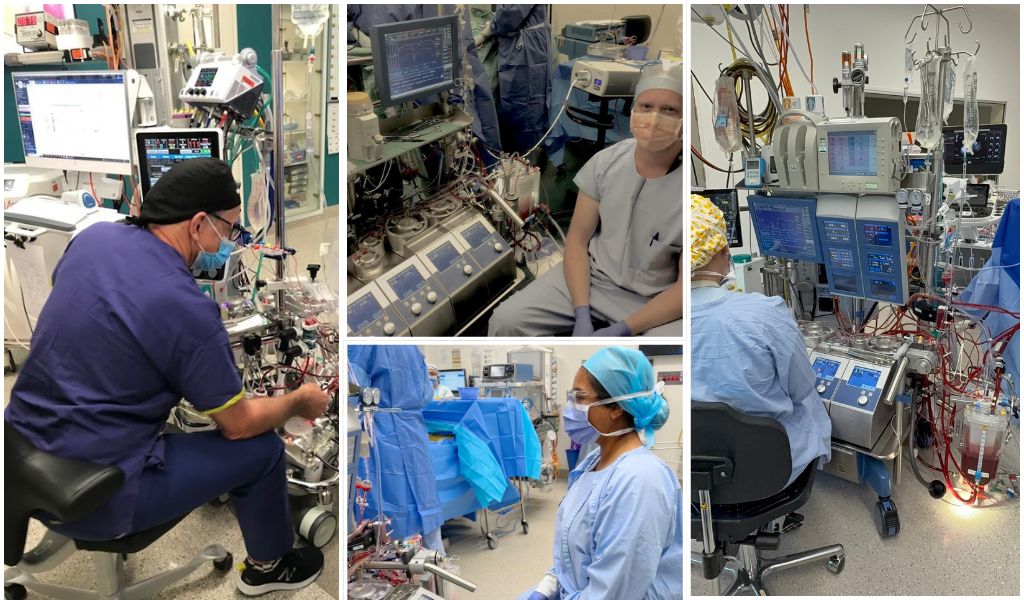
Understanding Clinical Perfusion
A clinical perfusionist is a highly specialised healthcare professional responsible for managing extracorporeal circulation and other technologies that temporarily support or replace the function of the heart and lungs.
During cardiopulmonary bypass, the perfusionist operates the heart-lung machine and manages important physiological parameters including blood flow, pressure, oxygenation, carbon dioxide removal, temperature, anticoagulation and other aspects of the patient’s circulation while surgery is performed on the heart.
Perfusionists require a strong understanding of anatomy, physiology, haematology, pharmacology, physics and extracorporeal technology, together with the ability to interpret complex clinical information and respond safely to rapidly changing situations.
Perfusionists play a vital role in:
- Cardiopulmonary bypass during complex cardiac surgery
- ECMO delivery, management, and support in ICU, ED, and CTOT
- Organ preservation and ECMO retrieval
- Organ transplantation, including heart, lung, and liver
- Ventricular Assist Device delivery, management, and support
- Safe delivery of intrathoracic/intraperitoneal chemotherapy
- Intraoperative cell salvage in emergency haemorrhagic cases in various surgical fields such as orthopaedics, obstetrics, neurosurgery, vascular and cardiac procedures.
The exact scope of a perfusionist’s role will depend on the hospital, patient population and local service model.
There is no single typical day.
A perfusionist may begin by reviewing the surgical list and relevant patient information, preparing and checking the cardiopulmonary bypass circuit and equipment, participating in team briefings and then managing extracorporeal circulation during surgery.
Clinical work may be interspersed with equipment management, quality assurance, education, research, simulation, professional development and departmental responsibilities.
Cardiac surgery can also be unpredictable. Cases may take considerably longer than expected, emergency surgery may arise, and many perfusion services provide after-hours and on-call coverage.
Perfusion requires a combination of scientific understanding, technical ability and professional judgement.
Useful attributes include:
- attention to detail;
- organisation and preparation;
- ability to manage multiple sources of information simultaneously;
- sound clinical reasoning;
- communication and teamwork;
- willingness to seek and respond to feedback;
- adaptability;
- ability to remain effective during unexpected events;
- professional accountability;
- curiosity and commitment to ongoing learning; and
- understanding of one’s own limitations and when to escalate concerns.
These abilities develop over time and are an important focus of clinical training.
A great deal.
During cardiopulmonary bypass, the perfusionist is responsible for managing the extracorporeal circulation that is keeping blood flowing and oxygenated while the heart and lungs are being supported or temporarily replaced.
The consequences of error can therefore be immediate and serious.
Perfusionists work within a multidisciplinary team, but they are professionally accountable for the safe operation of the circuit, the decisions they make within their scope of practice, and recognising and responding when something is wrong.
This requires a strong sense of responsibility, sustained vigilance and an understanding that even routine practice must be approached with seriousness of purpose.
Perfusion requires a high level of personal responsibility, sustained concentration and professional discipline.
There may be long periods where very little appears to be changing from the outside looking in, but the perfusionist must remain continuously alert because deterioration or circuit problems can develop quickly and have serious consequences. The perfusionist may be monitoring upwards of 50 parameters or more at any one time, for hours on end.
The role may be difficult for someone who struggles to:
- maintain attention for prolonged periods;
- stay engaged during repetitive or routine tasks;
- tolerate long or unpredictable working days;
- take responsibility for high-stakes decisions;
- respond constructively to feedback;
- remain effective when tired, stressed or under pressure;
- prioritise patient needs over personal convenience when required; or
- consistently follow safety processes even when nothing appears to be going wrong.
Perfusion does not require a particular personality type, but it does require maturity, reliability and an understanding that the patient cannot afford for the person managing their circulation to become distracted, complacent or disengaged.
Perfusion is one of the few professions where you can directly apply advanced physiology, technology and clinical decision-making in real time while supporting a patient’s circulation and oxygenation during some of the most complex procedures performed in hospital.
You may find yourself:
operating a heart-lung machine during open-heart surgery;
managing a patient’s circulation while the heart is stopped;
supporting ECMO or other mechanical circulatory support;
working alongside cardiac surgeons, anaesthetists and intensive care teams;
interpreting physiology minute by minute;
troubleshooting highly specialised technology; and
contributing to procedures that can be genuinely life-saving.
For many perfusionists, the appeal is that the work sits at the intersection of medicine, physiology, engineering and technology.
It is technically fascinating, intellectually demanding and unlike almost any other healthcare role.
The responsibility is significant, but so is the privilege of being trusted to perform it.
Planning Your Education
If you are interested in perfusion while still at secondary school, this is an excellent time to begin building a broad science foundation.
Where available and appropriate for your intended university pathway, subjects such as:
- Chemistry;
- Physics;
- Biology or Human Biology; and
- Mathematics
can provide useful preparation for later university study in the health and medical sciences.
You do not train directly as a perfusionist after Year 12. The usual pathway is to first complete an appropriate undergraduate degree and subsequently secure a clinical perfusion traineeship while completing postgraduate perfusion education.
When selecting an undergraduate degree, consider not only the name of the degree but also the individual subjects contained within it. Choosing a degree that includes human anatomy, human physiology, chemistry and physics, or provides sufficient elective space to complete them, may make it easier to meet postgraduate admission requirements later.
Year 12 subjects are valuable preparation but should not be assumed to replace the university-level prerequisite study required for postgraduate entry.
Because admission requirements may change during the several years between secondary school and postgraduate study, students should review the current requirements again as they progress through university.
There is no single undergraduate degree required for a career in perfusion.
Applicants come from a wide range of backgrounds, including:
- biomedical science
- medical science
- health science
- paramedicine
- cardiac physiology
- medical imaging and sonography
- laboratory science
- biomedical engineering
- critical care nursing
- physiology and other science disciplines.
Rather than selecting a degree solely because of its title, consider whether the course provides a strong foundation in the sciences relevant to perfusion and whether it allows you to complete the required prerequisite areas.
Clinical qualifications can provide valuable healthcare experience, while science-based degrees may provide greater exposure to foundational scientific concepts. Neither background is automatically preferable, and individual trainee employers determine their own recruitment criteria.
There is no single preferred pathway.
A clinical degree, such as nursing, paramedicine or another healthcare profession, may provide experience in patient care, multidisciplinary teamwork, clinical communication and working within complex healthcare environments.
A science-based degree may provide greater depth in areas such as physiology, chemistry, physics, biomedical science, laboratory methods and research.
Both backgrounds can provide valuable preparation for perfusion.
The more important consideration is whether your chosen course develops a strong academic foundation, meets or allows you to meet the relevant prerequisites, and provides skills and experience that you can continue to develop regardless of whether you subsequently obtain a perfusion trainee position.
It is worth keeping the broader picture in mind.
Perfusion is a small profession, and only a limited number of trainee positions become available. Entry into a relevant undergraduate degree should therefore not be viewed simply as a waiting period before perfusion training as there realistically is no guaranteed entry into the training program.
Choose a degree that:
- genuinely interests you;
- provides useful knowledge and transferable skills;
- offers reasonable alternative career opportunities; and
- allows you to develop the academic foundation required for postgraduate perfusion training.
You may become interested in other areas during your undergraduate education, and having a meaningful qualification in its own right provides greater flexibility.
If you are already interested in perfusion and your degree provides elective choice, this can be useful to consider.
For example, if your core degree includes anatomy and physiology but not chemistry or physics, electives may provide an opportunity to complete the missing foundational areas without undertaking additional study after graduation.
Before selecting electives solely for this purpose, review the current postgraduate admission requirements and the content of the unit you are considering.
Course requirements can change, so planning ahead is useful, but applicants should continue checking the current requirements as they progress through their degree.
Academic Eligibility and Prerequisites
Applicants should always check the current Monash University admission requirements before applying.
At the time this FAQ was reviewed, the published Entry Level 1 requirements for training include:
- an Australian bachelor degree or equivalent in a relevant area of study;
- a Weighted Average Mark of at least 60;
- relevant prerequisites at a 6 CP University level of:
- human anatomy
AND - human physiology
AND - physics
AND - chemistry
- human anatomy
- a clinical perfusion traineeship at an ANZBP-accredited training institution for the duration of the program.
Monash University is responsible for determining whether an applicant satisfies the academic requirements for admission.
The relevant areas of undergraduate study are:
- Human Anatomy
- Human Physiology
- Chemistry
- Physics
The purpose of these prerequisites is to ensure that students enter postgraduate perfusion education with sufficient foundational science knowledge to engage with more advanced cardiovascular, extracorporeal and clinical concepts.
There are no particular external university units that the ANZBP recommends.
Universities use different unit names and structures, and there may be several appropriate ways to obtain relevant foundational knowledge.
When reviewing potential units, you may wish to consider whether they are undergraduate-level units offered within a science, biomedical science, health science or related faculty and whether the unit content provides an appropriate foundation in the discipline.
The following examples may help when reviewing unit outlines.
Anatomy
Useful foundational content may include:
- anatomical terminology and body organisation;
- structure and relationships of the major body systems;
- cardiovascular anatomy;
- respiratory anatomy;
- thoracic anatomy;
- cardiac chambers, valves and great vessels;
- major systemic and pulmonary vessels;
- major organs and their anatomical relationships; and
- basic regional anatomy.
Physiology
Useful foundational content may include:
- cellular physiology;
- cellular metabolism and energy production;
- ATP production and cellular respiration;
- membrane transport;
- diffusion and osmosis;
- ion gradients and membrane potentials;
- cardiovascular physiology;
- the cardiac cycle and haemodynamics;
- respiratory physiology and gas exchange;
- renal physiology;
- fluid and electrolyte regulation;
- acid-base physiology;
- muscle physiology; and
- homeostatic control mechanisms.
Chemistry
Useful foundational content may include:
- atomic structure and chemical bonding;
- solutions and concentrations;
- acids, bases and pH;
- chemical reactions;
- stoichiometry;
- chemical equilibrium;
- oxidation and reduction;
- thermodynamics;
- chemical kinetics;
- gases and gas behaviour; and
- chemistry relevant to biological systems.
Physics
Useful foundational content may include:
- pressure;
- flow and resistance;
- fluid mechanics;
- Newtonian and non-Newtonian fluids;
- viscosity;
- energy, work and power;
- thermodynamics;
- heat and heat transfer;
- diffusion;
- gas laws and gas behaviour;
- basic electricity and electrical principles; and
- application of physical principles to biological or medical systems.
A unit does not necessarily need to cover every topic listed above. These examples are intended to help prospective applicants identify study that provides a broad scientific foundation relevant to later perfusion education.
Final assessment of whether previous study meets university admission requirements remains the responsibility of Monash University.
Start by reviewing:
- your academic transcript;
- the unit names;
- the detailed unit descriptions or handbook entries from the year in which you studied them; and
- where available, learning outcomes or subject content.
A unit title alone may not always make the disciplinary content clear.
For example, a broad health sciences unit may include some physiology without necessarily representing sufficiently detailed university-level study in human physiology.
If your previous study is not clearly identifiable as anatomy, physiology, chemistry or physics, you should review the current Monash admission requirements and seek advice from Monash University regarding your individual academic eligibility.
Not necessarily.
Health professional degrees can provide an excellent clinical foundation for perfusion, but course structures vary significantly between universities and may also change from year to year.
For example, one nursing degree may include substantial anatomy and physiology but relatively little standalone chemistry or physics, while another curriculum may be structured differently.
Applicants should therefore review their individual transcript and unit content rather than assuming that a particular degree automatically meets all prerequisite requirements.
Clinical experience and academic prerequisite requirements should also be considered separately. Extensive healthcare experience can be valuable when applying for employment but does not necessarily replace university admission prerequisites.
Usually, completing an entire additional degree would not be necessary simply to obtain one missing area of foundational study.
Depending on the individual’s circumstances and current university admission requirements, it may be possible to undertake a single university unit of study or another recognised form of study in the missing discipline.
Applicants should check with the relevant university before enrolling to ensure that the proposed study is appropriate for their intended admission pathway.
There may be different ways of developing or demonstrating prerequisite knowledge.
Universities are increasingly changing the bridging programs they offer, and the availability and recognition of individual bridging courses may change between admission periods.
This may be important to consider because trainee perfusion positions are competitive and some prospective applicants may apply over more than one recruitment cycle before obtaining a position.
Applicants may therefore wish to consider whether completing a formally assessed undergraduate university unit provides a useful and enduring academic record of study, particularly if they may be applying in future years.
However, the most appropriate option will depend on the individual’s existing study and the admission requirements applying at the time. Monash University currently also lists particular Monash short or bridging studies among examples that can meet some prerequisite areas.
Applicants should review the current Monash admission requirements before enrolling in additional study.
The ANZBP sets professional training and certification requirements, but university admission decisions are made by Monash University.
Questions regarding whether individual undergraduate units satisfy Monash admission prerequisites should therefore be directed to Monash University.
The ANZBP can provide information about professional training, accredited training institutions and certification requirements.
No.
Academic eligibility and employment selection are two separate processes.
Meeting the university prerequisites means that you may be academically eligible to undertake the relevant postgraduate program if the remaining admission requirements are also satisfied.
A trainee perfusion position is employment, and each hospital or employing organisation conducts its own competitive recruitment process.
Understanding the Training Pathway
Perfusion training in Australia and New Zealand is a work-integrated pathway.
For the local trainee pathway, trainees undertake postgraduate academic education while simultaneously completing supervised clinical training within an ANZBP-accredited perfusion service.
In simple terms, the pathway is:
Relevant undergraduate degree and prerequisites for eligibility with the academic program
↓
Secure a trainee perfusionist position at an ANZBP-accredited training institution
↓
Register as a trainee with the ANZBP
↓
Complete the recognised postgraduate academic program while undertaking supervised clinical training
↓
Complete required clinical cases, assessments, observations, portfolio requirements and research activity
↓
Meet eligibility requirements and complete the ANZBP Certification Examinations
↓
Certification as a CCP (ANZ)
The local training pathway requires the clinical traineeship and academic program to operate together.
Current Monash Entry Level 1 requirements include a clinical perfusion traineeship at an ANZBP-accredited training institution, and applicants are required to provide verification of their trainee status.
You should therefore not assume that enrolling in the Master’s program independently will provide a pathway into clinical training.
Yes.
Clinical training for the recognised local pathway must occur within an ANZBP-accredited training institution under the appropriate approved supervision arrangements.
Only trainees employed within appropriately accredited training environments can progress through the recognised local clinical training and certification pathway.
The current list of accredited institutions is available on the ANZCP website.
The organisation should review the ANZBP Training Accreditation requirements.
Training-site accreditation considers factors including clinical activity, case exposure, supervision capacity, staffing, governance, equipment and support for work-integrated education.
Prospective trainees should not assume that employment at a non-accredited site will automatically allow enrolment in the recognised academic pathway or progression toward ANZBP certification.
The Monash Master of Cardiovascular Perfusion Entry Level 1 program is currently structured as two years part-time.
The training program usually takes 2 – 3 years. Clinical progression also depends on the trainee obtaining sufficient appropriate clinical exposure and completing all required ANZBP milestones.
Training should therefore be viewed as competency and experience based, rather than assuming that the passage of two calendar years alone guarantees completion.
Trainees should always refer to the current ANZBP Clinical Trainee Guidelines, Clinical Supervision Policy, Examination Policy and associated portfolio requirements.
Current requirements include a minimum of 200 cardiopulmonary bypass cases, together with structured clinical assessment and documentation throughout training.
Trainees currently submit case evaluations/reflections and case logbook documentation at 20-case milestones.
Clinical observation requirements also include exposure outside the trainee’s usual population and training institution.
Clinical responsibility progresses gradually.
Trainees begin with direct supervision and move toward greater independence as their experience and demonstrated competence develop.
Current ANZBP requirements specify direct supervision for the first 125 cases, with appropriately structured indirect supervision possible later where the approved supervisor considers this appropriate and relevant policy requirements are met.
A trainee is not expected to practise independently simply because they have accumulated a particular number of cases.
Yes. The local certification pathway includes completion of a research project and presentation at the ANZCP Annual Scientific Meeting in accordance with current ANZBP requirements.
Research forms part of developing evidence-based practice, critical appraisal and professional contribution to the perfusion community.
Yes.
Completion of the university program alone does not automatically result in ANZBP certification.
Trainees must meet the relevant academic, clinical, portfolio and other eligibility requirements before undertaking the ANZBP Certification Examinations.
Candidates should refer to the current ANZBP Examination Policy and certification information for the applicable requirements and examination format.
The academic and clinical components of the local pathway are linked.
If a trainee position ceases, the individual will no longer have access to the required accredited clinical training environment.
Current requirements indicate that a student may need to take intermission from the academic program until another appropriate trainee position is secured, or otherwise withdraw from the program.
Trainees should contact both Monash University and the ANZBP promptly if their employment circumstances change.
Finding and Applying for a Trainee Position
Trainee perfusionist positions are employment positions offered by individual hospitals or perfusion services.
The ANZCP and ANZBP do not allocate prospective trainees to hospitals.
Positions may be advertised through:
- hospital and health-service recruitment websites;
- government health employment portals;
- general employment websites;
- the ANZCP employment page; and
- professional networks.
Setting job alerts for terms such as perfusionist, trainee perfusionist and clinical perfusion can be helpful.
Trainee perfusionist positions are highly competitive.
Perfusion is a small profession, and the number of new trainees that can be supported each year is limited by workforce need, clinical caseload, supervision capacity and the availability of accredited training positions. A single advertised position may therefore attract a large number of applicants (often over 100 applicants) from a range of clinical, scientific and technical backgrounds.
Meeting the academic prerequisites does not guarantee that you will secure a trainee position, and applicants should be prepared for the possibility of applying across more than one recruitment cycle.
Geographical flexibility can increase the number of opportunities available to you. Applicants who are able to consider positions across Australia and New Zealand will generally have access to a broader range of vacancies than those limited to a single city or state.
However, relocation is a significant decision. Employment conditions vary between organisations, and some trainee contracts may include expectations regarding a period of service following training. Applicants should carefully review the employment contract and conditions associated with each position before accepting an offer.
There is no standard timeframe.
Trainee positions are influenced by workforce requirements, service growth, retirements, resignations, departmental succession planning and the capacity of individual units to provide appropriate training.
Some applicants may obtain a position relatively quickly, while others may apply across several recruitment cycles or several years.
For this reason, it is sensible to continue progressing within your current profession or field of study rather than placing other career development entirely on hold while waiting for a perfusion opportunity.
Not securing a trainee position on your first application is not unusual.
Trainee vacancies do not arise at predictable intervals, and many strong applicants apply across several recruitment cycles before obtaining an opportunity.
An unsuccessful application also does not necessarily mean that you are unsuitable for perfusion. Recruitment decisions may reflect the needs of the particular department, the experience of the applicant pool, the type of service being provided and the qualities that the unit is looking for at that point in time.
While continuing to apply, it is important to keep progressing professionally rather than putting your broader career on hold.
Continue building experience, developing your skills and maintaining career options that are valuable independently of perfusion.
There is no guaranteed timeframe for obtaining a trainee position, so prospective applicants should approach perfusion as one career goal within a broader professional plan rather than relying on a trainee position becoming available within a particular timeframe.
This is strongly worth considering.
Trainee employers may need confidence that the successful applicant is academically eligible to enter the required postgraduate program.
Being able to provide a clear academic transcript demonstrating the required foundational study can therefore simplify the recruitment and enrolment process.
If you know that you are missing a prerequisite, addressing this early may avoid difficulty if a trainee position becomes available unexpectedly.
Not necessarily, unless specified by the employer.
Trainees enter perfusion from a range of backgrounds.
Previous experience in areas such as paramedicine, cardiac physiology, sonography, biomedical science, laboratories, critical care nursing, research or other healthcare environments can provide relevant transferable skills.
However, clinical experience should not be viewed as the only pathway into perfusion. Applicants with strong scientific, technical or research backgrounds may bring a different but equally valuable set of capabilities.
Applicants without substantial clinical experience may need to demonstrate their strengths in other ways, including:
- scientific understanding;
- technical aptitude;
- problem solving;
- communication and teamwork;
- professional responsibility;
- ability to work under pressure;
- willingness to learn; and
- a realistic understanding of clinical perfusion.
Individual hospitals determine the experience and attributes they value for each trainee position.
Use the time to continue developing professionally.
The aim should not simply be to accumulate qualifications for a perfusion application. Instead, look for experiences that strengthen the knowledge, judgement and professional skills that will also be valuable if you later enter perfusion training.
Depending on your background, this might include:
- developing further clinical experience;
- progressing within your existing profession;
- gaining experience in critical care, cardiac care, ECMO or other relevant clinical environments;
- developing experience in cardiac physiology, sonography, biomedical science, laboratories or research;
- completing any outstanding academic prerequisites;
- developing research or quality-improvement experience;
- strengthening your understanding of cardiovascular anatomy and physiology;
- attending relevant professional education or ANZCP activities; or
- completing relevant education such as the ANZBP Autotransfusion Course.
Current and previous trainees have entered the profession from many different backgrounds, including critical care nursing, ECMO, paramedicine, cardiac sonography, cardiac physiology, research, biomedical engineering and laboratory sciences.
There is no single experience that guarantees selection.
The strongest use of the waiting period is to continue building a meaningful career and transferable skill set rather than placing your professional development on hold while waiting for a perfusion vacancy.
Applicants who are geographically flexible will naturally have access to a broader range of potential employment opportunities.
However, relocation is a significant personal decision and should be considered carefully.
Employment conditions, contractual requirements, registration or immigration requirements and the practical implications of relocation should be reviewed for each position.
Start by responding carefully to the requirements of the particular job advertisement.
A strong application should make it easy for a selection panel to understand:
- why you are interested in clinical perfusion;
- that you understand what the profession involves;
- whether you meet the academic pathway requirements;
- what relevant experience and transferable skills you bring;
- examples demonstrating teamwork, communication and clinical or technical judgement; and
- why you are interested in that particular training opportunity.
Attention to detail matters. Proofread your application, follow the application instructions and ensure that claims about your experience can be supported with clear examples.
Professional networking can be useful, but mass emailing departments is unlikely to substitute for applying through a formal recruitment process when a position becomes available.
If you contact an individual perfusionist or department, keep the communication:
- brief;
- personalised;
- professional; and
- clear about why you are contacting them.
Demonstrating that you have already researched the profession and training pathway generally leads to a more useful conversation.
The ANZCP and ANZBP do not employ or allocate trainees.
Individual hospitals and perfusion services are responsible for recruitment.
The ANZBP’s role includes professional training standards, training accreditation and certification.
Prospective applicants should monitor employment opportunities and apply directly to recruiting organisations.
Possibly, but this depends entirely on the individual hospital and department.
Hospitals may have restrictions relating to:
- patient privacy;
- infection control;
- operating theatre access;
- insurance;
- occupational health requirements; and
- the availability of staff to supervise observers.
A department being unable to accommodate shadowing should not be interpreted as discouragement.
If you’d like to pursue shadowing, you can try contacting chief perfusionists directly via email or LinkedIn but understand that they may not be able to accommodate your request. The day-to-day tasks of a perfusionist are quite varied, so they may be able to accommodate someone to visit one week and may not be able to do something similar for a few months for the next person.
Shadowing opportunities can help you decide if you want to pursue perfusion, they do not necessarily give you an increased chance in getting a position. There are a number of resources and videos online of the daily activities of a perfusionist.
In the meantime, we highly recommend focusing on other valuable activities, such as gaining clinical experience in a related field or even networking with perfusionists at conferences. These activities can be just as beneficial for your applications.
A short and thoughtful introduction is usually best.
Briefly explain:
- who you are;
- your current background;
- why you are interested in perfusion; and
- the specific advice you are seeking.
Before contacting someone, review the information already available through the ANZCP and Monash websites.
Perfusionists work in busy clinical environments, so there may be delays in receiving a response or they may not be able to accommodate requests for meetings or observation.
Repeated unsuccessful applications can be discouraging, particularly when you have invested significant time preparing for a career in perfusion.
It is important to recognise that the number of trainee positions is small and that many well-qualified applicants may be competing for the same role. Some applicants will therefore apply across several recruitment cycles before securing a position.
If you have been applying for some time, consider reviewing your approach rather than simply submitting the same application repeatedly.
Where appropriate, you might consider:
- seeking constructive feedback following interviews;
- reviewing whether your application clearly demonstrates the selection criteria;
- broadening the geographical area in which you are willing to apply;
- continuing to develop relevant professional experience;
- addressing any gaps in your academic preparation;
- developing interview and communication skills; and
- considering what additional responsibilities or experiences in your current role could demonstrate readiness for a demanding postgraduate clinical training program.
At the same time, maintain realistic alternative career pathways.
Perfusion is a highly specialised profession and there is no guarantee that an individual applicant will ultimately obtain a trainee position. Continuing to develop your existing profession or another career pathway provides professional progression and security while still allowing you to pursue perfusion opportunities when they arise.
Where the recruiting organisation is able to provide feedback, it can be valuable to ask.
Feedback may help identify areas such as:
- interview technique;
- understanding of the profession;
- responses to behavioural or scenario-based questions;
- application quality;
- experience gaps; or
- areas that could be strengthened before another recruitment process.
Feedback should be viewed as information for development rather than as a guarantee that making a particular change will result in selection next time.
Recruitment pools also differ between positions, so being unsuccessful in one process does not necessarily predict the outcome of another.
What to Expect During Training
Training is demanding because trainees are developing advanced clinical skills while completing postgraduate academic study.
The experience varies between institutions, but trainees should expect to balance:
- clinical work;
- case preparation;
- supervised skill development;
- academic assessments;
- reading and self-directed study;
- portfolio and logbook requirements;
- feedback and reflection;
- research;
- workshops and educational activities; and
- progressively increasing clinical responsibility.
Good organisation and time management are important.
Many trainee positions involve substantial clinical employment while the Master’s program is undertaken part-time.
The exact employment fraction is determined by the employer and must also satisfy current university requirements.
Prospective trainees should recognise that postgraduate study occurs in addition to a demanding clinical training role.
Perfusion has a steep learning curve.
Trainees should expect to receive regular feedback and should raise concerns early with their supervisors where they are experiencing difficulty with knowledge, clinical performance, workload or progression.
Clinical training is intended to be developmental. Recognising an area requiring improvement and responding constructively to feedback is an important part of becoming an independent clinician.
Perfusion training is demanding, and prospective trainees should have a realistic understanding of the commitment involved before entering the program.
Common themes described by current and recent trainees include:
- Long and unpredictable clinical days. Cardiac surgery does not always run to schedule. Complex cases may continue well beyond the expected finish time, emergencies can arise unexpectedly, and on-call commitments may result in overnight or weekend work.
- A significant academic workload. Clinical training occurs alongside postgraduate university study. Trainees may move from a demanding clinical day into readings, assessments, portfolio work, tutorials or research commitments.
- Competing responsibilities. Balancing clinical training, university study, relationships, family responsibilities and personal wellbeing can be challenging. Good organisation is essential, but there will also be occasions where work or study needs to take priority.
- Periods where life can feel temporarily “on hold”. Particularly during busy clinical periods, major assessments or examination preparation, trainees may find that social activities, travel and other commitments need to be reduced.
- Increasing responsibility. As trainees progress, they are expected to integrate increasingly complex information, anticipate clinical problems and take greater responsibility for their decision-making under supervision.
- Continuous feedback. Perfusion has a steep learning curve. Trainees should expect their clinical practice to be observed, questioned and discussed regularly. Being able to receive feedback constructively and use it to improve is an important part of training.
- High expectations for preparation. Trainees are expected to arrive prepared, understand the patient and procedure, anticipate the likely perfusion strategy and progressively take greater ownership of their learning.
Despite these demands, many trainees describe perfusion training as highly rewarding.
The opportunity to apply physiology and technology directly to patient care, develop highly specialised clinical skills, contribute meaningfully within a cardiac surgical team and see their competence grow over time can be extremely satisfying.
For many trainees, some of the greatest rewards come not only from performing cardiopulmonary bypass, but from reaching the point where complex clinical situations begin to make sense and they can contribute confidently to the team.
Perfusion training requires significant commitment. Prospective trainees should consider both the opportunities and the demands when deciding whether the pathway is right for them.
This can be one of the more challenging aspects of perfusion training.
Trainees are combining a demanding clinical role with postgraduate study, and clinical work does not always finish at a predictable time.
There may be periods where:
- assignments coincide with busy clinical weeks;
- a case continues several hours beyond the expected finish;
- on-call interrupts a weekend;
- study needs to occur during evenings;
- travel is required for workshops or professional activities; or
- examination preparation temporarily reduces social and family time.
Many trainees successfully balance training with partners, children and other responsibilities, but this usually requires planning, communication and support.
Prospective trainees should discuss the likely commitment with the people who will also be affected by it.
International and Overseas-Trained Applicants
Eligibility for university study, employment and local clinical training can depend on citizenship, residency, visa status and the current university admission requirements.
Prospective international applicants should review the current Monash University eligibility requirements before pursuing trainee employment.
Do not assume that eligibility to work in Australia or New Zealand automatically creates eligibility for the local perfusion training pathway.
Generally, an already-qualified overseas perfusionist should first investigate the ANZBP Overseas Trained Perfusionist pathway rather than assuming that the local trainee pathway is appropriate.
The OTP pathway is designed to assess whether an overseas-trained perfusionist’s education, experience and clinical practice meet the standards required for recognition in Australia and New Zealand.
Applicants should review the current Overseas Trained Perfusionist Policy and application process on the ANZCP website.
Academic admission and recognition of previous university study are determined by the university.
Applicants with overseas qualifications should review Monash University’s requirements for equivalent qualifications, English language requirements and supporting documentation.
Professional trainee and certification requirements remain subject to ANZBP requirements.
Life as a Perfusionist
At times, yes.
Perfusion involves direct responsibility for a patient’s circulation and oxygenation during periods when the heart and lungs may be partially or completely supported by extracorporeal technology. Small changes can become important quickly, and some situations require immediate recognition, communication and action.
The stress does not necessarily come from every case being dramatic. Much of perfusion involves preventing problems before they occur: recognising subtle trends, anticipating the next stage of the operation, checking that equipment and medications are ready, and remaining alert even when a case appears routine.
A perfusionist therefore needs to be able to tolerate responsibility and uncertainty without becoming either overwhelmed or complacent.
There is no single personality type that makes a good perfusionist, but the role requires a useful balance between vigilance and composure.
Perfusionists need to care when something is changing. A degree of concern or heightened alertness can be protective because it encourages preparation, checking and early recognition of problems.
At the same time, anxiety that becomes overwhelming can make it harder to process information, prioritise, communicate clearly or make decisions.
The opposite can also be problematic. Being calm is valuable, but being so relaxed that subtle changes are overlooked, risks are underestimated or urgency is not recognised is not the same as performing well under pressure.
The aim is not to be someone who “never gets stressed”. It is to develop the ability to remain appropriately alert, methodical and responsive when the stakes are high.
People considering perfusion should reflect on how they respond when:
- several things require their attention at once;
- a plan suddenly changes;
- another team member challenges their decision;
- an unexpected problem develops;
- they need to speak up quickly;
- they are tired but still need to maintain concentration; or
- they carry significant responsibility for another person’s safety.
These abilities can develop with experience, training and good supervision, but they are central to the profession.
A significant proportion of perfusion practice involves planned procedures, familiar equipment and well-established clinical processes.
However, even routine cases require sustained attention because conditions can change unexpectedly.
A case may be progressing uneventfully and then quickly require management of:
- unexpected bleeding;
- difficulty separating from cardiopulmonary bypass;
- haemodynamic instability;
- oxygenation problems;
- equipment or circuit issues;
- changes in the surgical plan; or
- an unexpected emergency.
Perfusion therefore requires the ability to maintain vigilance during long periods where very little may appear to be happening, while still being able to respond immediately when something changes.
For some people, that combination of prolonged concentration and occasional high-intensity decision-making is one of the most appealing parts of the job. For others, it can be mentally tiring.
It varies significantly between institutions, and prospective perfusionists should ask about this when considering a position.
Some services have large teams, predictable elective workloads and relatively infrequent on-call commitments. Other departments are small and provide cardiac surgery, ECMO, transplantation or emergency services around the clock.
This can mean that your working day does not always finish when expected.
A case listed to finish in the afternoon may become more complex and continue into the evening. An emergency may arrive shortly before the end of the day. A patient may deteriorate overnight and require urgent mechanical circulatory support.
The nature of cardiac surgery means that the needs of the patient do not always align with the roster.
This does not mean that perfusionists cannot have a good work-life balance. Many do. It does mean that predictability and flexibility vary considerably between jobs, and this is an important part of understanding the profession.
This is an important consideration and one that can easily be underestimated before entering the profession.
Perfusion can require some personal and family sacrifice, particularly in services with frequent on-call or emergency work.
Depending on your roster and workplace, there may be times when you:
- arrive home much later than expected;
- miss dinner or evening plans;
- are called away from family or social events;
- need to cancel plans at short notice;
- work weekends;
- work overnight;
- work on public holidays;
- are rostered over Christmas, Easter or other important occasions;
- have sleep interrupted by emergency call;
- need to remain within a defined distance of the hospital while on-call; or
- cannot participate fully in an event because you must remain available and fit for work.
For partners, children and families, this can mean occasionally sharing the unpredictability of the profession.
Someone may need to manage school pick-ups, childcare, family events or other responsibilities when you are unexpectedly still at work or have been called back to hospital.
This is not unique to perfusion, but because many perfusion departments are relatively small, individual staff members may carry a meaningful share of after-hours coverage.
A supportive family environment and realistic discussion about these expectations can make a significant difference.
Many perfusionists successfully combine the profession with parenting, relationships and family life.
However, it often requires organisation, reliable support and good communication.
Depending on the individual’s circumstances, considerations might include:
- childcare arrangements that can accommodate early starts or late finishes;
- backup plans for unexpected call-outs;
- sharing responsibilities with a partner or family members;
- the frequency of overnight and weekend call;
- commuting distance from the hospital;
- opportunities for flexible or part-time work; and
- the staffing and rostering model of the department.
There is no single model that works for everyone.
Prospective perfusionists may find it useful to ask practising perfusionists at different career stages how their particular departments manage rostering, leave, on-call and family commitments.
Potentially, yes.
Cardiac surgery, ECMO, transplantation and emergency circulatory support do not necessarily stop on weekends or public holidays.
The extent of weekend and public-holiday work varies considerably between hospitals.
In some departments, elective cardiac surgery is predominantly performed Monday to Friday, with weekends covered primarily for emergencies. Other centres have substantial transplant, ECMO or emergency workloads.
Perfusion departments still need to provide appropriate coverage over periods such as:
- Christmas;
- New Year;
- Easter;
- long weekends; and
- other public holidays.
This means that you may occasionally be rostered or on-call during times when friends and family are on holiday.
Small departments also need to coordinate annual leave carefully to maintain safe staffing. It may not always be possible for everyone to take leave during the same school holiday, Christmas or popular travel period.
These arrangements vary by employer, but prospective perfusionists should understand that some flexibility around weekends, holidays and significant dates is part of many clinical perfusion roles.
Many perfusion services provide emergency coverage outside normal working hours.
Being on-call usually means that while you are not physically at the hospital, you must remain able to attend within the timeframe required by your organisation.
During an on-call period you may therefore need to:
- stay within an appropriate distance of the hospital;
- keep your phone available;
- remain fit and ready to work;
- avoid activities that would prevent you from attending promptly;
- accept that plans may change with little warning; and
- potentially return to work overnight after already completing a normal working day.
You may receive no calls during an entire on-call period. Alternatively, you may be called in unexpectedly and remain at the hospital for many hours.
The uncertainty itself can be an adjustment.
Some people find on-call relatively easy to incorporate into their lives. Others find the inability to completely switch off more difficult than the actual call-outs.
Yes, and it is worth being realistic about this before entering the profession.
Clinical responsibility sometimes takes priority over personal plans.
An emergency may mean that you are late to a dinner, miss part of a birthday, leave an event unexpectedly or cannot attend something you had planned.
Being on-call during a family event does not necessarily mean you will be called in, but there is always that possibility.
Similarly, an elective case can become unexpectedly complex. Even when you are not on-call, you generally cannot simply leave a cardiopulmonary bypass case because your rostered finish time has arrived.
These situations should not be the everyday experience of every perfusionist, but they are part of the professional reality.
Perfusion is not generally characterised by heavy physical labour, but it does require physical and mental endurance.
Cases can last many hours, and the perfusionist must remain attentive to the patient and extracorporeal circuit throughout critical periods.
The profession can involve:
- early starts;
- long periods of standing or sitting;
- sustained concentration;
- extended cases;
- emergency work;
- overnight work;
- disrupted sleep from on-call; and
- returning to work after an interrupted night, subject to local fatigue-management arrangements.
- inability to have routine lunch breaks, especially during emergency after-hours work
Long cases can be surprisingly tiring because concentration must be maintained even when the work is not physically strenuous.
Perfusionists work with patients who may be critically unwell and may be involved in:
- emergency cardiac surgery;
- major aortic surgery;
- complex congenital or paediatric cases;
- ECMO;
- transplantation;
- resuscitation;
- unexpected deterioration; and
- situations where a patient does not survive despite the efforts of the team.
The technical nature of perfusion does not remove the human aspect of the work.
Some cases stay with you.
Perfusionists need to develop healthy ways of processing difficult outcomes, reflecting on clinical events and seeking support when required.
A strong departmental culture, appropriate debriefing, collegial support and the ability to talk openly about difficult cases are important.
The demands of perfusion are also closely connected to what many people find rewarding about it.
Perfusionists have the opportunity to:
- contribute directly to life-saving and life-changing procedures;
- work at the intersection of physiology, technology and clinical medicine;
- manage complex physiology in real time;
- work closely with surgeons, anaesthetists, nurses and other highly specialised clinicians;
- solve technical and physiological problems;
- support patients through some of the most complex procedures performed in hospitals;
- continually develop new skills;
- work with evolving technology;
- contribute to ECMO, transplantation and mechanical circulatory support;
- teach and supervise the next generation of clinicians;
- participate in research and quality improvement; and
- develop a high level of professional expertise.
For people who enjoy responsibility, physiology, technology, teamwork and continual learning, perfusion can be an exceptionally satisfying career.
It is important, however, to be attracted to the reality of the profession, rather than only the idea of operating a heart-lung machine.
Perfusion is a relatively small and specialised profession.
Workforce requirements vary geographically and over time and are influenced by cardiac surgical activity, ECMO and mechanical support programs, retirement, workforce movement and service development.
The number of qualified perfusion positions and the number of trainee positions should not be assumed to be the same. A service may require experienced perfusionists without currently having the capacity to train an additional trainee.
Clinical perfusion remains the core career pathway, but experienced perfusionists may develop interests in areas such as:
- adult cardiac surgery;
- paediatric and congenital cardiac surgery;
- ECMO;
- transplantation and retrieval;
- mechanical circulatory support;
- blood conservation;
- education and simulation;
- clinical leadership;
- quality improvement;
- research;
- university teaching;
- device development;
- medical technology and industry; and
- professional governance.
Opportunities depend on the individual’s experience, interests and local service environment.
Yes.
Perfusion is a rapidly evolving field involving changes in technology, clinical evidence, surgical techniques and extracorporeal support.
Certified perfusionists are expected to maintain professional currency and meet the applicable ANZBP recertification and continuing professional development requirements.
Graduation and initial certification should therefore be viewed as the beginning of ongoing professional learning rather than the end of training
Potentially.
Perfusion certification and professional recognition vary between countries.
An ANZ-trained perfusionist considering overseas employment should investigate:
- local professional certification requirements;
- recognition of qualifications;
- immigration and work requirements;
- employer requirements; and
- any examinations or credentialling processes required in that jurisdiction.
ANZBP certification should not automatically be assumed to provide unrestricted practice rights in another country.
Where should I go for further information?
We kindly ask that you review this FAQ list thoroughly before reaching out with questions, as many common queries are addressed here.
If you have read through all of these FAQ’s, and still have questions, you can contact the ANZBP Course Coordinator at abcpcoordinator@anzcp.org. Keep in mind that the Board and College, cannot find you a trainee position. The responsibility of securing a traineeship is entirely up to the individual.
Refer to the Australian and New Zealand Board of Perfusion information available through the ANZCP website.
Please contact the ANZBP Course Coordinator at abcpcoordinator@anzcp.org
Monitor hospital, health-service and relevant employment websites and apply directly to the employing institution.
Refer to the current ANZBP Overseas Trained Perfusionist pathway and policy.